Are you a victim of workplace harassment in the age of remote work?
Ad
Wellness
Are you a victim of workplace harassment in the age of remote work?
When office closure puts distance between colleagues, many hoped that incidents of harassment would end. That flame quickly went night.
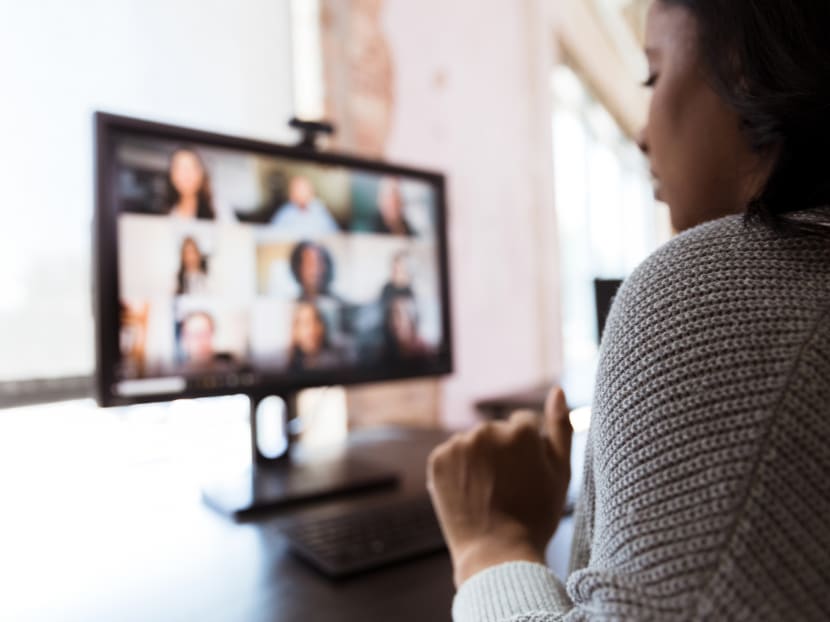
(Photo: iStock/SDI Productions)
Last year, as offices airtight across the country and kitchen tables became desks, contemplating the possible upsides of the new professional puzzler felt like a means of survival. There was much tumult, and there were many questions.
Among them: In one case we all became boxes on Zoom or text bubbling in a chat, and once we were physically separated from colleagues and clients, would incidents of workplace harassment drib?
That flame quickly went dark.
WHAT IS VIRTUAL HARASSMENT?
Kalpana Kotagal, partner at Cohen Milstein in the ceremonious rights and employment group, says workplace harassment of whatsoever kind occurs when an employee uses protected characteristics – things like race, gender, sexual orientation, seniority or socio-economic status – to concord power over a colleague or staff fellow member.
The result is a so-called hostile work surroundings – a workspace that feels unsafe, can experience threatening to someone'south identity or inhibit employees from doing their work.
"Words can exist harassing, images can be harassing, and threatening behaviour tin can exist harassing, whether it's in-person or not," Kotagal said.
What surprised many was the extent to which remote work made it easier for some employees to exert ability over those who were comparatively vulnerable.
That'southward considering the channels through which remote piece of work occurs – text, phone, video – are oftentimes unmonitored, unrecorded or occur outside employer-sponsored platforms.
Knowing that no one's watching can embolden foul play.
Knowing that no ane's watching can embolden foul play, too. In an in-person office setting, bystanders tin be "a source of protection if they are trained, able or brave enough to step upwards," Kotagal said.
Just working from domicile deprives us of witnesses; the colleague who may otherwise overhear an off comment in the office is not present when nosotros're on a call at domicile.
Complicating things is the air of informality around workplace communication, which increased with the shift to remote piece of work during the pandemic.
"Since the start of the pandemic, employees have felt equally if online environments are the Wild West, where traditional rules do not apply," said Jennifer Chocolate-brown, a diversity, disinterestedness and inclusion expert and founder of Jennifer Brown Consulting.
That can exacerbate misconduct, particularly given how difficult it tin can be to discern intent from text stripped of tonal cues.
And pandemic-imposed stress compounded these realities. "We know that stress impacts manipulative behaviour, making people more likely to snap or quickly get angry," Brown said.
"So if we already have our filters downwards in this more informal online environment, and we're existence careless considering we're nether a lot of pressure, it's a recipe for disaster."
READ: A health bus can help you lot in areas doctors can't in primary care practices
Co-ordinate to a Deloitte survey, Women at Work: A Global Outlook, 52 per cent of women take experienced some form of harassment or microaggression in the by twelvemonth, ranging from the belief that their judgment is being questioned because they are women to disparaging remarks about their physical appearance, advice fashion, race, sexual orientation or caregiving condition.
Some other study from Project Include, a not-profit organization that aims to accelerate diversity and inclusion in tech, found that 25 per cent of respondents experienced an increase in gender-based harassment during the pandemic, about x per cent experienced an increment in race- and ethnicity-based hostility, and 23 per cent of respondents who were 50 years and older experienced increased age-based harassment or hostility.
The big learning we had is people will harass people and exist hostile to people no affair what the surround – they will observe a way.
"The large learning we had is people will harass people and be hostile to people no matter what the environment – they will find a way," Ellen Pao, CEO of Projection Include, told Reset Piece of work, a new business publication distributed through email.
"For them, information technology was easier to harass remotely, because at that place was so much privacy in those interactions. I don't have a colleague next to me while I'm yelling at somebody, and then nobody is seeing me or overhearing me being a harasser.
"It fabricated information technology easier in many ways because they could text or they could chat.
"All all of a sudden, these i-on-ane communications became normal, and you could invade somebody's privacy in their own home in a fashion that you couldn't practice at the office."
OUR RESPONSIBILITIES UNCOVERED
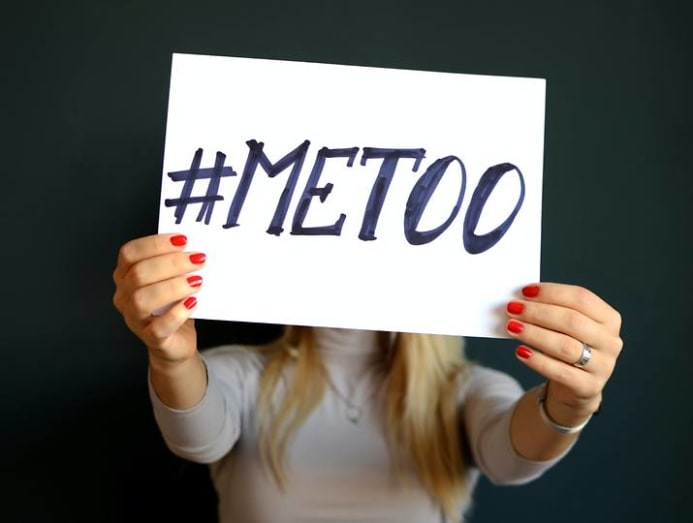
While obscene instances such as Zoom masturbation become headlines, more common examples of incivility and harassment tin include unwelcome comments about an employee'south appearance, demeanour, concrete surround, productivity or political beliefs.
Taken in isolation, these remarks can seem benign, and they sometimes are. Noting that a colleague is wearing pyjamas during a meeting is "not necessarily an invitation to sex", said Vicki Schultz, professor of police force and social sciences at Yale Police force School.
"This is a mischaracterisation of what sexual harassment actually is and misses its meaning as behaviour that undermines equality," she said, noting how common information technology is for businesses and public figures akin to exploit the full general public'due south misunderstanding of sexual harassment.
These circumstances do not necessarily engender sexual harassment, but they phone call attention to gender in a manner that women have worked for years to disengage, Schultz said.
"It'due south the eye rolling, snide commentary – the kinds of things women feel when they work in low numbers," she said.
Comments most bringing children to meetings or existence unavailable due to care responsibilities, for example, tin can make women, parents and caregivers feel as if they are non valued in the aforementioned fashion as other employees.
"It tin be subtle, but nosotros know that subtle things tin can be meant and experienced as microaggressions," Schultz said.
Remote work can as well crack open aspects of identity – religious or cultural background or sexual orientation, for example – an employee may have preferred to proceed private.
Pre-COVID-19, employees could obscure aspects of their personal lives like what their dwelling house looks like.
The blurring of professional and personal spaces is conveying trauma from dwelling into the workplace and vice versa.
Gone is the separation between physical personal spaces and professional work. Now, a painful meeting might take place in your living room or bedroom, threatening compartmentalisation.
"The blurring of professional and personal spaces is carrying trauma from domicile into the workplace and vice versa," Kotagal said.
READ: 'Inside, I was crumbling': How tin can we better support the mental health of mothers?
Brown said: "We often hide for a reason, and for many of us, the pandemic made that covering impossible. Y'all may non be able to avert a same-sex partner walking in the background of your screen, a parent's emphasis, a religious ornamentation on the wall, poor Internet signal or manifestations of anxiety."
Reveals similar these can worsen employees' sense of control during an already unpredictable period.
And then at that place's racial incivility.
According to Pew Research in 2020, 58 per cent of Asian Americans say "information technology is more than common for people to limited racist or racially insensitive views most people who are Asian than it was earlier the coronavirus outbreak."
Further, 39 per cent of Asian Americans surveyed report that others had acted uncomfortably effectually them, and 31 per cent study being the subject of race-based jokes or slurs, including at work.
Employees demand not explicitly call out Asian colleagues to create a hostile surround. Work conversation platforms like Slack get in easy to post uncontextualised manufactures or comments – for example, discussing Asian clan with the coronavirus.
WHERE WE GO FROM Here

Perhaps the near damning element of remote workplace harassment is how woefully unprepared companies are to address it.
"Hr in almost workplaces still has not caught up to what virtual forms of misconduct and harassment expect and feel like, and there's a lack of policies and procedures effectually what is acceptable," Chocolate-brown said.
Without standards about how to communicate or behave on Slack, Zoom, e-mail or any other remote platform, it'due south hard for employees to know what to practise when they feel uncomfortable, and for employers to hold employees accountable.
Reporting compliance was a challenge earlier the pandemic; now it's much harder with virtual platforms every bit our primary means of connection.
But in that location are certainly things companies can exercise.
To first, a good remote harassment policy ought to include an expansive definition of what harassment is and looks similar at piece of work. "A definition that's limited to physical touching is too limited," Kotagal said.
Next is establishing the channels through which an employee can study, and a clearly defined procedure to follow if a report comes in.
"How do y'all apace address employee concerns? What resources does the company have at its disposal to practise the forensic electronic work that can freeze communication earlier information technology'due south gone?" Kotagal asked.
"Retention policies for workplace emails and text messages on visitor phones give you a way to become back and collect evidence, even if the reporting employee has not kept receipts for obvious reasons."
READ: How to cope with feelings of dubiousness and brand a fresh start
The investigation processes are also critical. "Good HR professionals know how to do interviews, talk to folks, drill downward into the details, write clear policies and enforce them," Kotagal said.
Only doing that kind of interview work in a remote setting is more than challenging, she said, calculation, "It'due south hard to sympathise where people are coming from, how they're feeling and perceive the unspoken cues."
Knowing that many employees will not report, management ought to embrace proactive procedures as well.
"Employers need to exist especially race-conscious right now, privately checking in with each employee and paying special attention to what employees of color might be needing," Schultz said, noting that Asian American employees are historically less likely to report harassment.
Publicly naming racial trauma instead of acting as if information technology does not affect the professional sphere is important, along with encouraging employees to take care of themselves and take time off.
Finally, individuals working remotely should practise everything they tin to protect themselves. "It's important to have notes," Kotagal said. "It's important to document behaviour in a contemporaneous manner considering that builds credibility and a narrative over fourth dimension."
Also, call up your colleagues: They tin can exist turned into de facto "bystanders" in an environment with low trust, safe, processes or procedures.
And of course, behaviour can exist reported fifty-fifty if information technology doesn't all the same feel egregious.
"If behaviour feels weird but hasn't yet crossed an obvious line, there's however an opportunity to engage with your supervisor or HR well-nigh information technology," Kotagal said. "That can assist nip information technology in the bud."
By Leah Fessler © The New York Times
This article originally appeared in The New York Times.
https://world wide web.nytimes.com/2021/06/08/usa/workplace-harassment-remote-piece of work.html

Contempo Searches
Trending Topics
Source: https://cnalifestyle.channelnewsasia.com/wellness/workplace-harassment-in-the-age-of-remote-work-248106
0 Response to "Are you a victim of workplace harassment in the age of remote work?"
Post a Comment